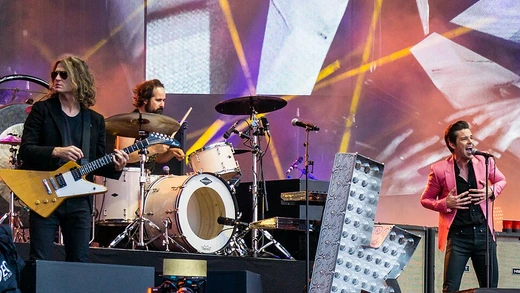
Nick
A man caught between loyalty and the line he swore he'd never cross.

Nick is a character in the narrative world of *The Killers*, a story-driven property that follows a cast of individuals drawn into a tense, morally complex conflict. Within the ensemble, Nick occupies a central emotional and narrative role, serving as one of the primary lenses through which the audience experiences the escalating stakes of the story.
As a fan-recognized figure, Nick is often discussed in terms of his personal motivations, his relationships to the other principals, and the choices he makes under pressure—elements that make him a recurring subject of fan theory and character analysis.
- Character
- Nick
- Property
- The Killers
- Role
- Principal character
- Affiliation
- Core cast ensemble
- Status
- Active in narrative
Lore & Background
Nick's place in *The Killers* is defined less by a single defining act and more by the accumulation of small, consequential decisions that ripple outward through the ensemble. He is the character fans most often point to when discussing the story's thematic core: the tension between personal bonds and the demands of a situation that leaves little room for clean choices. His relationships with the other principals are layered, shifting in tone as the narrative progresses, and it is in those shifting dynamics that much of the story's emotional weight lands.
The world of *The Killers* is one where the line between protagonist and antagonist is deliberately blurred, and Nick exists squarely in that grey space. He is not presented as a hero in the traditional sense, nor as a villain; rather, he is a person whose ordinary desires—safety, connection, a sense of control—collide with extraordinary circumstances. Fans frequently note that his most memorable moments are the quiet ones: a hesitation, a look held a beat too long, a word left unsaid.
In fan communities, Nick is a touchstone for discussions about moral ambiguity in storytelling. His arc is read as a study in how pressure reshapes identity, and his interactions with the rest of the cast are parsed for subtext, foreshadowing, and emotional payoff that rewards rewatching or rereading.
In Their Own Story
The rain hadn't stopped for three days, and the neon from the street sign bled red across the wet asphalt. Nick stood under the awning, collar up, watching the crosswalk. He'd been waiting forty minutes. He told himself it was patience. He told himself a lot of things.
The figure that finally stepped out of the grey was smaller than he expected. They didn't speak. They never did, not at first. Nick lit a cigarette he didn't need, let the smoke curl between them, and said the only thing that felt true: "You didn't have to come back."
The other person almost smiled. Almost. Then the streetlight flickered, the rain thickened, and the whole city went quiet except for the hum of the transformer on the corner. Nick exhaled. Whatever came next, he was already part of it. He'd been part of it for a long time.
Reader's Guide
Nick is the emotional anchor of *The Killers*—a person whose core want (to protect what he loves without losing himself) is systematically tested by the story's escalating conflicts.
His arc moves from a place of relative stability into a space of irreversible consequence. Early on, he operates on instinct and loyalty; by the story's later beats, those same instincts become the very things that complicate everything. Fans track his shifts in tone, body language, and dialogue as the primary barometer of how far the situation has deteriorated.
Signature traits include a dry, understated way of speaking that masks considerable inner turbulence, a tendency to deflect with a half-joke when the moment demands honesty, and a physical stillness that makes his rare moments of visible emotion land with particular force. He is the character who says "I'm fine" in a voice that clearly isn't.
His intersections with the rest of the cast are the engine of the narrative. Each relationship carries its own history and its own wound, and Nick is the node where those wounds converge. In fan analysis, his dynamic with the other principals is where the story's central question—how much of yourself you're willing to spend for the people you care about—becomes most acute and most painful to watch.
Did You Know?
- Nick's name is deliberately common and unflashy, a choice fans interpret as reinforcing his role as an everyman thrust into extraordinary circumstances rather than a larger-than-life archetype.
- In fan discussions, Nick is frequently cited as the character whose quiet, off-screen moments (a held breath, a turned-back head) carry as much narrative weight as the story's most dramatic set pieces.
- The character's arc is often described by fans as a 'slow-burn' trajectory, where the most consequential decisions are the ones that feel smallest in the moment they're made.
- Nick's interactions with the ensemble cast are structured so that no single relationship carries the full thematic load; instead, the meaning of his choices emerges from the pattern across all of them.
More in Characters
Elsewhere in the The Killers universe
Spotted an error? Know more?
This is a living reference — every entry is fact-audited, and reader corrections feed straight into our audit queue. Suggest an edit · See this site's audit record